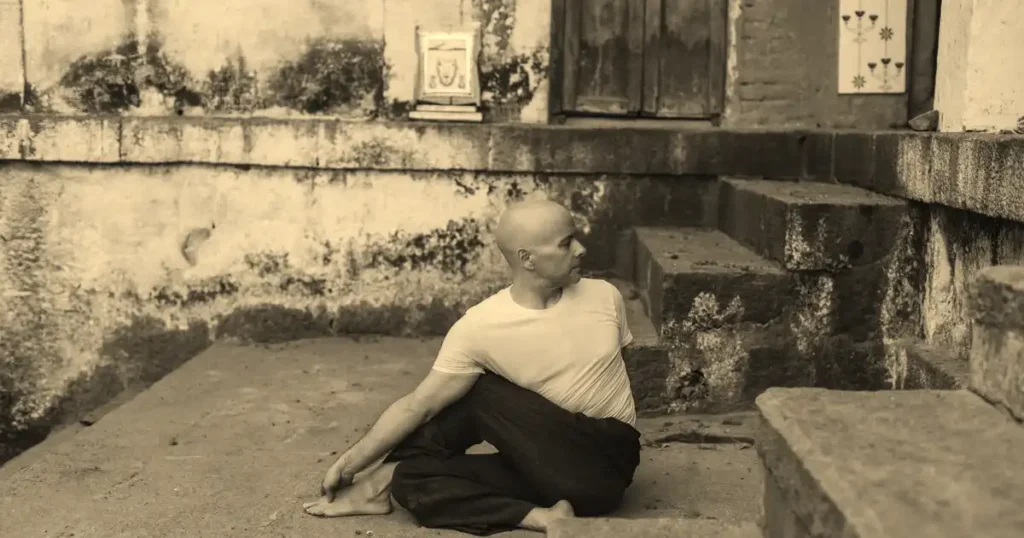
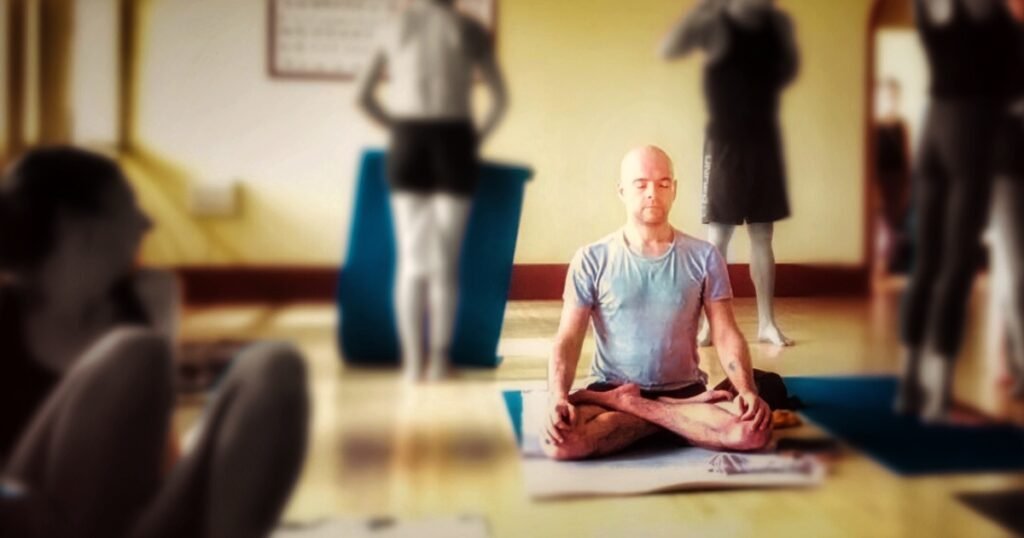
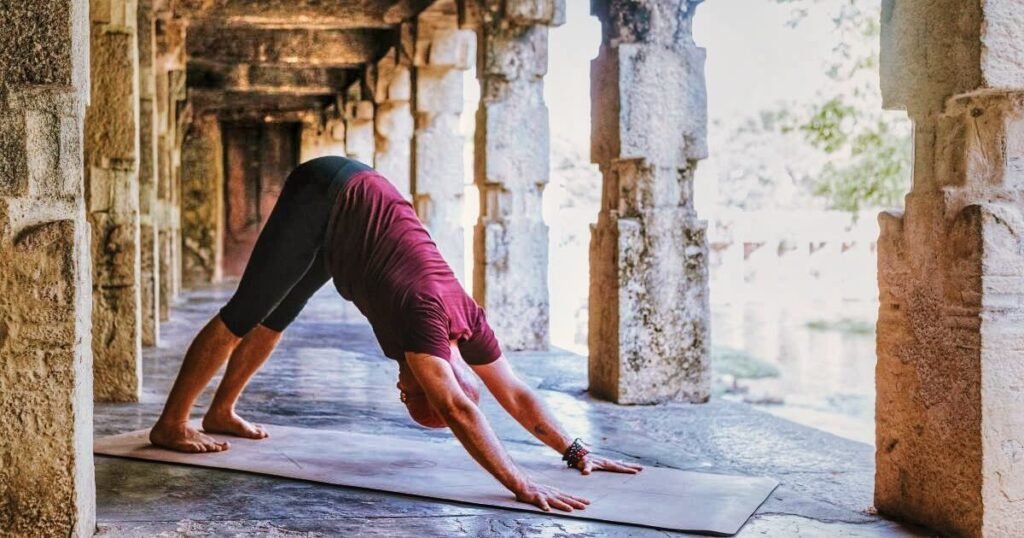
Some time ago, while doing my first Surya Namaskar A of the day, I did a quick calculation.
Practising an average of 10 sun salutations a day, six days a week, counting only the last 13 years, I have done more than 35,000.
Thirty-five thousand times I have raised my arms above my head, folded forward, jumped back.
And you know what?
The first 5,000 I didn’t do correctly.
In the early years I thought practising meant only one thing: full sequence, exact number of breaths for each asana, no modifications.
If I didn’t do everything perfectly, it didn’t count.
When I discovered Ashtanga I was already a Hatha Yoga teacher. I had some experience, I knew the philosophy.
But when I arrived in Mysore to practise with Sharath Jois — after three days on a train from northern India, where I was travelling — I became what I would today call the “Ashtanga Police”.
I silently judged those who modified.
The number of breaths had to be exactly as prescribed.
Any deviation from the tradition felt like a betrayal of some kind of purity.
Black or white. Right or wrong.
Maybe at the beginning we all need a clear and simple direction to follow.
The problem is when that direction becomes a prison.
Then life happened.
Travels, commitments, days when the body was asking for something different.
And I had to choose: be rigid like a tree trunk, risking breaking, or learn the flexibility of the twig.
I chose the twig.
I understood something that today seems obvious to me but back then it wasn’t:
Trying to hold sand in a closed fist is pointless. The sand slips away.
Only an open hand, ready to receive and to let go, can hold the sand.
I didn’t stop respecting the tradition — I found a deeper, more subtle understanding of it.
The discipline I put into my daily practice is not a dogma or a punishment.
It is an act of love towards myself.
Today I still practise the first three complete series and I am working on the fourth. With discipline, without expectations.
80% of the days my asana practice is still central and full.
Some days I do many vinyasas moving through handstands, other days I listen to what my body asks and go lighter.
Even if the series doesn’t change, the way it is expressed can change.
Some days I have time, other days are harder and I need to reduce the time on the mat or the intensity of the practice.
And that’s fine.
Practice is like a fire that needs to be kept alive by adding one log at a time.
Sometimes it’s a big log, sometimes a twig.
Sometimes it’s dry, sometimes it’s damp.
But the fundamental thing?
Keep feeding the fire.
After all, the ultimate expression of my practice is the way I live my life.
Thirty-five thousand sun salutations later, I can tell you with certainty:
The magic is not in the perfect practice.
It’s in continuing, in showing up. Always.
Buona pratica
Om shanti