

«I can’t do it.»
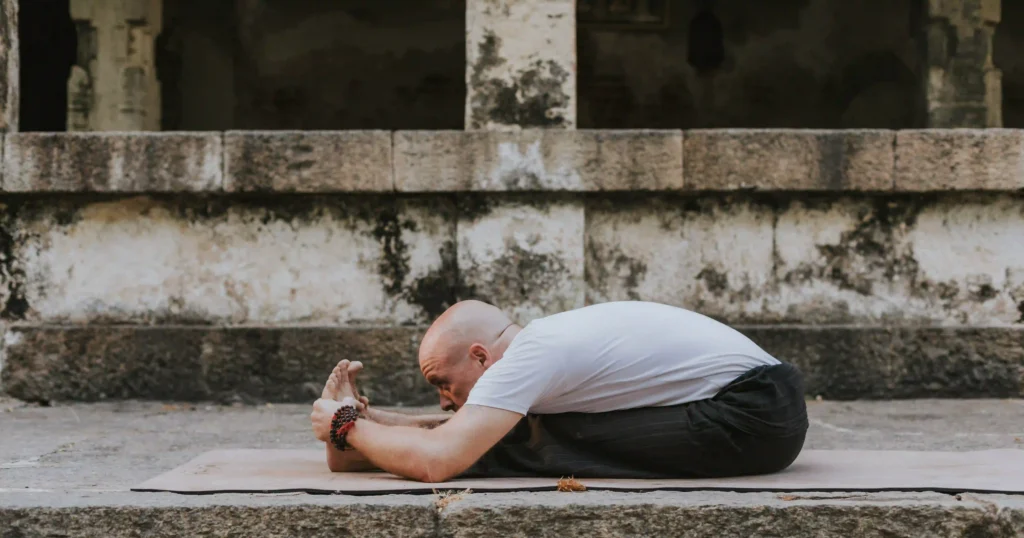
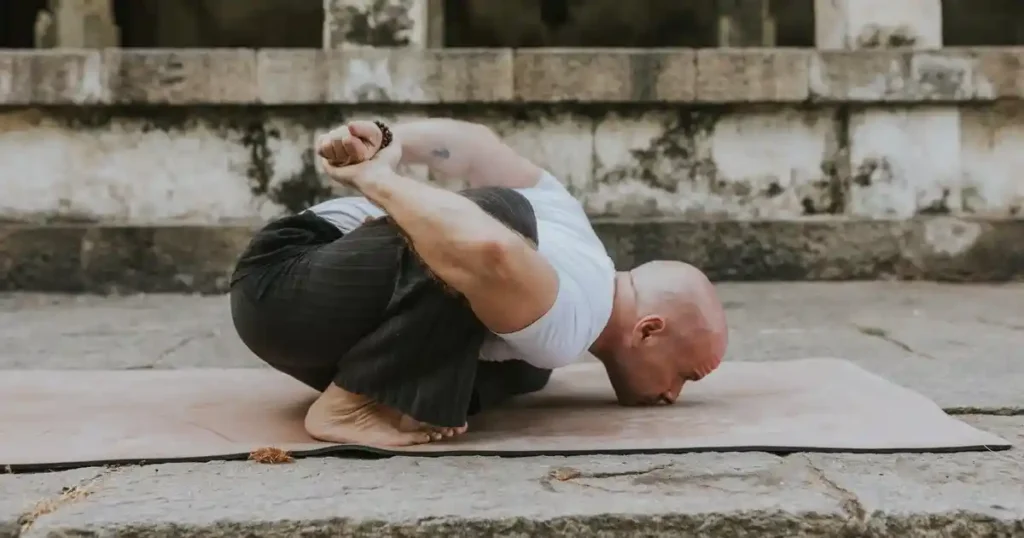
How many times have I heard a practitioner say something like this when faced with a challenging posture: the first jump into Bhujapidasana, catching the wrist in Marichyasana D, or doing the first drop-back.
Before coming out of the mouth, a statement like this has bounced around the walls of the mind for a while, until it finally rises above the background chatter and manages to be spoken aloud. Words carry their own weight: these sound like a definitive judgment, like the cement holding together the bricks of a wall between where you are now and where you are heading.
If you think I’m exaggerating, the next time you catch yourself saying something like this, try adding one more word at the end: «yet.»
Yes, «I can’t do it… yet.» A single word at the end of this statement makes the difference between a judgment that pins you down to an unchangeable result and the possibility of seeing yourself on a path, a journey in which each step is built upon the previous one. I think this applies to every aspect of life, and Ashtanga is no exception.
If you started practising Ashtanga as an adult, you will most likely encounter a challenging posture in your practice (and then another, and another): one that you can’t manage the first time you try it, or even after a month or a year. In many ways, this will be your good fortune: a testing ground, a real laboratory in which it is just you and that asana, day after day. It is your practice, and your aim is to express that posture—or, more precisely, to express yourself through that posture. Brute force alone will not be enough: you will have to surrender to the process and to repetition. You will need to discover the different parts that make up that particular shape of your body and where your weak points lie: which parts you are not fully present in, where the breath gets stuck, the shoulder complains, the ankle screams. It will be an opportunity to explore how the mind limits the body, preventing you from doing what you can, or how it demands that you do what you cannot. Perhaps you will discover that the way you express yourself in that posture is different from what you had imagined. This does not make your practice any less valuable – quite the opposite.
The path of Yoga is, first and foremost, experiential. It is not about racking your brain over the anatomy and kinematics of a posture, even though in my approach I also use these tools to help you understand the practice more deeply. It is about listening by quieting the inner chatter. This is the weight of that word: «yet.»
Most challenging postures are challenging for many practitioners. In Ashtanga Yoga, they are sometimes labelled gatekeepers: the postures that guard the keys to your asana journey. I like to think that when I encounter a posture of this kind, I am standing before a guardian of my ego.
Buona pratica
Om shanti



Subscribe to the Newsletter
Workshops, updates from the shala, reflections on practice. I write when I have something to say.
Newsletter Subscription Confirmed
Namasté,
thank you for subscribing.
You'll receive essential updates on Ashtanga Yoga practice, study, and events.
Have a good day and happy practicing!
See you soon
Alan