

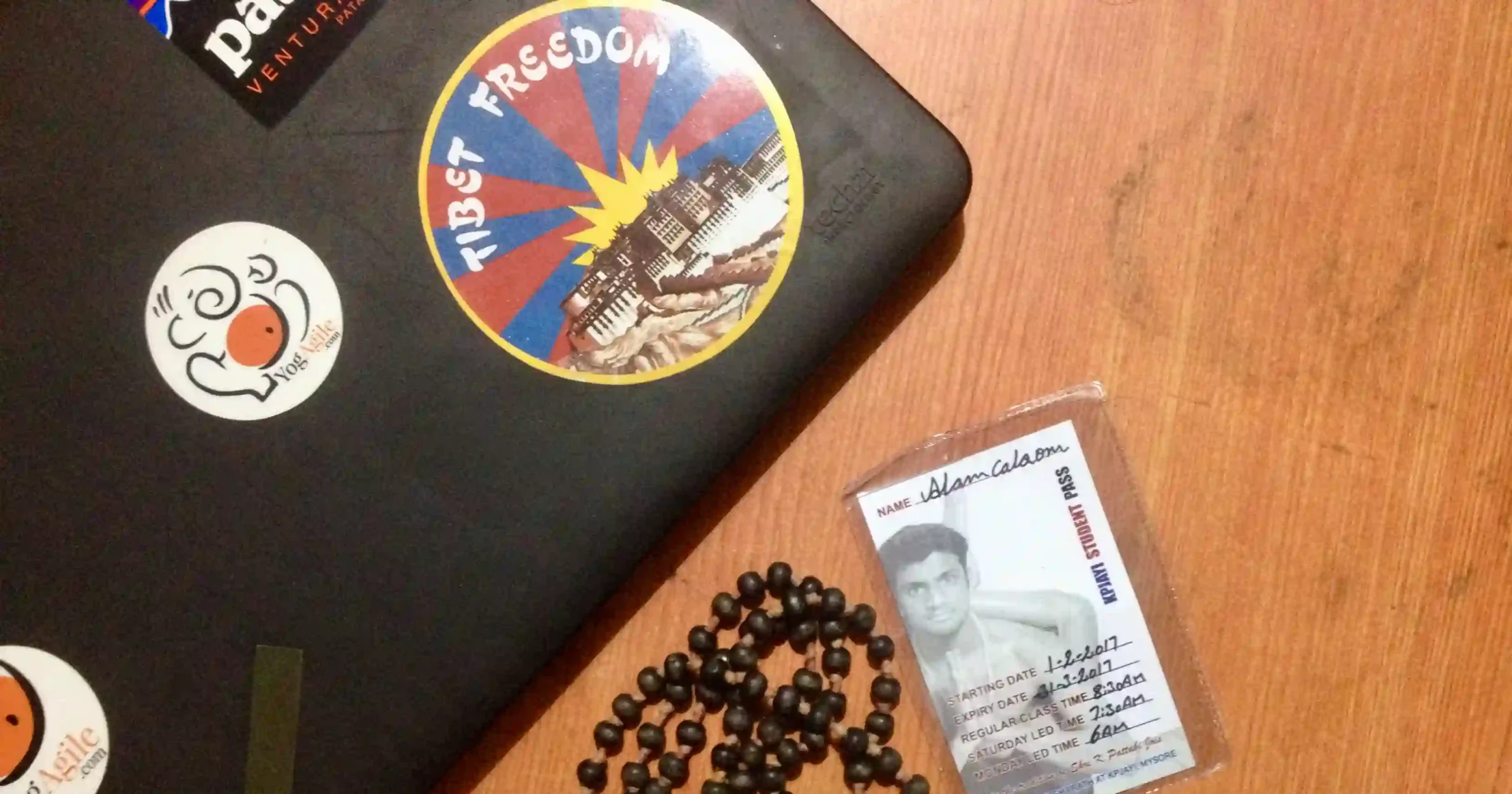
Every year, as the seasons change, I hear the same questions: I feel like I’ve gone backwards, I can’t do what I could two months ago, I’m having too many off days. Let’s talk about the seasons of Ashtanga.
Contents
How Ashtanga Practice Changes in Spring
When winter comes to an end and spring begins, there’s a seasonal shift in the practice too, in the body on the mat. Winter practice often requires a longer warm-up to avoid injury and to reach greater physical depth and intensity. It’s a different practice.
The body loosens up. When the weather stops being harsh on fingers and toes on the mat, like a rigid teacher ready to strike them with a ruler, my body begins to open with more spontaneity, almost with desire. The warm-up flows more easily and organically from the very first sun salutations; a light sweat — often absent in the cold winter — returns to signal that the body has reached its optimal temperature.
The ujjayi that has been a fundamental presence through the winter, warming the body and heating the muscles from within, now becomes lighter, accompanying a practice that, despite appearing more energetic, actually asks for less physical effort.
But the seasons of Ashtanga go beyond the weather: there are off days, regressions, shifts in rhythm — and each one is a season of its own.
Off Days in Ashtanga: What They Really Are
We all have off days, but not all of us handle them the same way. The instinctive reaction is to push them away, as if they were necessarily something negative and avoiding them was an option. Yet, in my experience, those days have often been among the most valuable.
On off days something in us doesn’t cooperate, creating obstacles and resistance to getting on the mat. Let’s look at the four main causes and how to deal with them:
Lazy Days: Trust the Process
The days when I got on the mat even though I didn’t feel like it, for no specific reason, just the inertia of getting out of bed: on those days I learned to take one breath at a time, one sun salutation at a time, to trust the process without clinging to a certain outcome. Once the initial friction is reduced, the result is usually that of a ball rolling down a slope, gaining more and more speed.
Body Not at 100%: Modify Your Ashtanga Practice
Other days, when energy is lower and the body is not at 100% — a sleepless night, a mild physical discomfort — have been occasions where I learned to practice by modifying some asanas or, if necessary, reducing their number.
Not Enough Time: A Shorter Ashtanga Series
There are days when there isn’t enough time for a full practice on the mat — maybe I’m traveling, or I have a series of appointments I can’t move. These are occasions to remind myself that my practice is not about making my body more flexible, but about making my mind more capable of adapting, letting go without clinging to unrealistic expectations. If today I only have 45 minutes instead of two hours, my practice will be 45 minutes, simple and effective. Over the years I have figured out how to do this and developed shorter versions of the series for these occasions.
Mind Not at 100%: Reducing Friction and Personal Workshop
Then there are the days when the mind doesn’t help, those when between the moment of waking up and the moment we set foot on the mat, the rest of the day barges in demanding our attention. Getting the mind back to the practice is not always easy; my first approach is, as with lazy days, to start gently, just one breath at a time, one sun salutation after another. Sometimes trusting the process is enough, other times I need something more engaging: these are often the moments when I go deeper into certain families of postures with different approaches, dedicating the practice to whatever feels most in tune with myself at that moment. I clear the mental friction so the practice can flow, and I sometimes end up doing a long personal workshop on backbending, handstands, or maybe spinal twists, working through all the postures from the first to the fourth series.
Off days are the ones where you always take something home — just showing up to your practice is a success. It doesn’t matter if you’re late, it doesn’t matter if the time and the asanas are fewer, it doesn’t matter if there are imperfections and you lose the breath. On off days, if you are present, if you get on the mat even to only do the sun salutations, you have had the awareness that your mind wanted to go somewhere else and you have gently brought it back on the right path — not scolding it, but guiding it home by the hand. Exactly as in breath meditation: the moment you realize you have lost concentration is also the moment you know where you are and where you need to go: you rediscover and reinforce your intentions, the foundation and engine of your actions.
Off Days or Real Stop: How to Tell the Difference
How do you tell the difference between off days and the ones where you should leave the mat rolled up? This in itself should be part of your practice: being able to listen to yourself and understand what the right choice is for you. In my case, the days when I don’t dedicate time to asana practice are rare, but they exist: sometimes I’m traveling, sometimes I have the flu, or circumstances beyond my control force me to adapt.
If it’s your body that’s creating doubts, my advice is to understand that there are fundamentally two ways to practice asanas incorrectly: too much and too little. If you push beyond your limits, perhaps ignoring an injury, that is the perfect recipe for getting hurt or preventing an existing injury from healing. If instead you practice below your limits you are not practicing safely, you are wasting your time — a bit like driving a Ferrari Testarossa to buy apples at the market down the street: you’d get there faster on foot and there would be no parking problem.
Your practice should come from a place of love for yourself. Don’t skip practice because it’s late and you wouldn’t get through the whole series, only to, later on, feel guilty about it — have you ever heard of ahimsa? Love yourself and take care of yourself: it’s your practice, shorten it if necessary, it’s not a problem. Practice is not only on the mat, that is just one of its expressions — and let me tell you: the easiest one.
Adapting the practice to meet yourself where you are is intelligence, not weakness. But there is a difference between modifying a session and changing the routine: the structure of the practice must be maintained, it is what takes you where you want to go over time. The structure is the melody, and the melody doesn’t change.
Progression and Regression in the Practice
Just as there are off days and seasonal changes, there are also changes in our personal season, our rhythm of life and our progress in the practice. Progress is not always linear; there can be moments when it feels like you’ve gone backwards. Asanas are by nature a mirror of the impermanence of things: just because you’ve learned to do a handstand doesn’t mean you can expect to execute it with the same ease every day. Sometimes, even for extended periods, you may not be able to perform a posture the way you were used to, or the lightness in your vinyasas disappears without warning. Your practice is not going backwards — it may look like regression from the outside, but how do you react to that? If you think your practice is going backwards just because it’s not as aesthetically performing as it was a few months ago, you risk judging a fish by its ability to climb a tree.
The way you read the different dimensions of progression in practice changes when practice takes root over time, over the years, when the next asana in the series is not an objective of the practice but a secondary effect connected to it. A bit like practicing asanas to lose weight: it’s true, asana practice could lead to weight loss, but it’s a side effect, not the goal. If someone asked you how your practice is going, it would sound weird to answer “I lost 2 kg last month.”
Ashtanga for Life: The Seasons of the Body
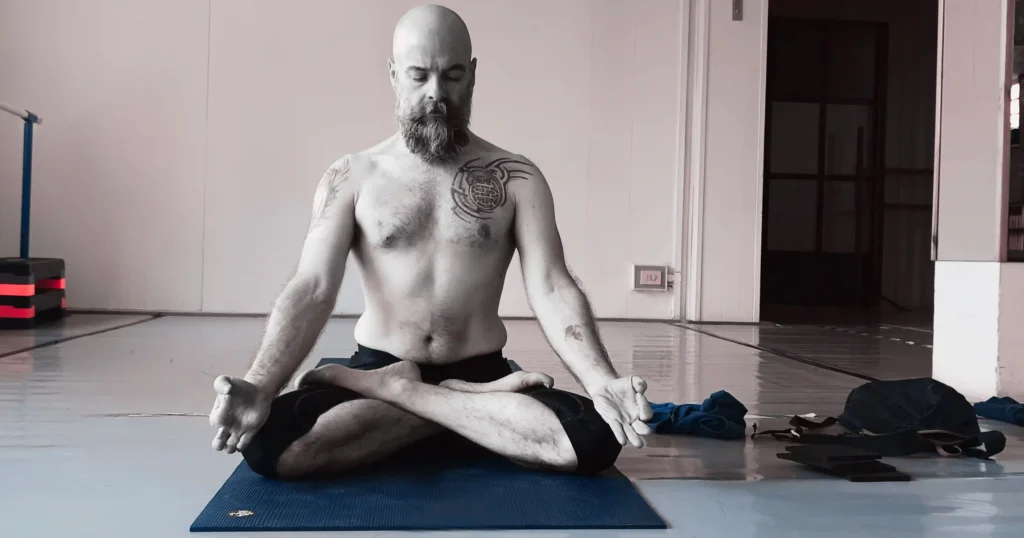
Every step we take in our lives, however small, leaves a mark. Our body tells the story of our journey. I practiced through my thirties, my forties, and I have recently started my fifties — things change, the body follows its own calendar.
When practice becomes a practice for life, the reference points and measures change. The off days and obstacles that I used to see with frustration as situations I would have avoided have become moments of growth. Even when unpleasant, they have a meaning, a value and a precise place. Sharing the shala with flexible people who complete the four series in five years or a little more (there are a lot of ex-dancers who have started practicing Ashtanga in recent years), knowing that at fifty I am in the first half of the fourth series — who knows if I will ever finish it — none of this is relevant.
The season outside may change, but the inner journey remains constant. The next time you get on the mat on an off day, ask yourself: is it winter or is it spring? The answer changes everything.
Buona pratica
Om shanti

Subscribe to the Newsletter
Workshops, updates from the shala, reflections on practice. I write when I have something to say.
Newsletter Subscription Confirmed
Namasté,
thank you for subscribing.
You'll receive essential updates on Ashtanga Yoga practice, study, and events.
Have a good day and happy practicing!
See you soon
Alan