

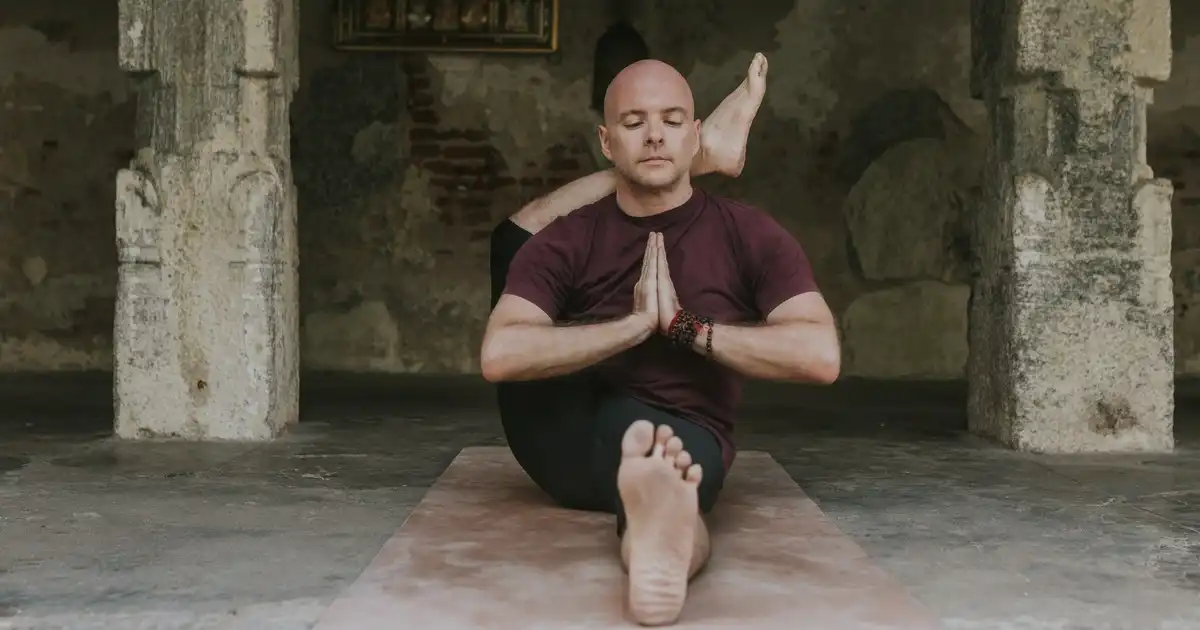
One morning a guy who had been practicing for a while in the shala in Mysore was making such a loud noise during his exhales that you could hear him from several mats away — I went to the bathroom and could still hear him from there. Keep in mind the shala is on the second floor and the bathroom is on the ground floor. Basically a pressure cooker venting steam.
I’ve heard the comparison between practice breathing and Darth Vader, but I’m afraid things are getting a little out of hand… must be the dark side of the Force.
One point everyone agrees on: during practice the mouth stays closed and you always breathe through the nose. It sounds like a small thing, but it’s fundamental.
Ujjayi Pranayama and Practice Ujjayi: Not the Same Thing
I can already hear the answer to the question in the title: “ujjayi, ujjayi pranayama!” Fair enough, but some clarification is needed.
Ujjayi breathing is characterized by a gentle contraction of the glottis that produces a slight hissing sound on both inhale and exhale. A simple way to find it: imagine fogging a mirror by exhaling with your mouth open, then close your mouth and keep exhaling through the nose.
That said, the ujjayi breath used in asana practice is not ujjayi pranayama. When we talk about pranayama strictly speaking, we’re talking about techniques that include breath retention (kumbhaka) — many traditional texts talk precisely about kumbhaka techniques rather than pranayama. But even on the physical level there are substantial differences.
Ujjayi pranayama has a calming effect on the nervous system: it stimulates the vagus nerve through sound, and activates the parasympathetic by lengthening the exhale relative to the inhale.
In Ashtanga asana practice the purpose is different: we want to keep the nervous system in a state of balance between activation and control to sustain a dynamic physical practice. This translates into keeping inhale and exhale roughly the same length. I said roughly because we can always modulate — lengthening the exhale after inversions, for example, to slow the heart rate.
This is why excessive noise during practice is a signal of nervous system overactivation. It’s no coincidence that the pressure-cooker guy has very developed and rigid musculature: in his practice the “fighting” component tends to dominate over surrender. It’s a normal phase — we all start from the physical body and then go deeper.
What Does the Tradition Say?
If we look for clear guidance from the lineage, the situation is less straightforward than you might think. The initial indication toward ujjayi pranayama was probably linked to a misunderstanding with Pattabhi Jois, who had limited English. Later, Sharath Jois clarified the point during his conferences: during practice use free breathing with sound.
Confirming this, Yoga Mala — the founding text of Ashtanga Vinyasa Yoga — never mentions ujjayi pranayama during asana practice, referring only to puraka and rechaka (inhale and exhale) and never using the word kumbhaka.
FOR ALL THE ASANAS, THE DETAILS OF THEIR BREATHING AND VINYASA methods, as well as of how to remain in their states in accordance with the vinyasa method, have to be learned from a Guru. Whatever my descriptions here, there will always be a difference in the actual method of a practice. For the convenience of the reader and aspirants, however, I have tried to be as descriptive as possible.
How to Breathe: The Mechanics
Both forms of ujjayi are based on integrated diaphragmatic breathing: the diaphragm leads, but the chest participates too through a light engagement of the core muscles — Uddiyana Bandha and Mula Bandha are active, the lower belly is contained and doesn’t expand.
Reducing it to “abdominal breathing” is an oversimplification that breaks the balance: puffing out only the belly doesn’t work. Effective breath is three-dimensional, fluid, effortless.
The most common errors in practice: sound too loud (a sign of tension, not control), forced glottis (the restriction happens gently and naturally: it is more about bringing awareness to the area than actively doing something), rhythm disconnected from movement, and above all unconscious micro-retentions of breath in difficult postures.
The point is not “doing ujjayi” but letting it happen and understanding how to use it. When the breath is steady, quietly regulated and effortless, it is doing its job. When it becomes loud, rigid, or performed, it has already lost its direction.
Breath as Practice
n asana practice ujjayi breath is long, internal, light, not the protagonist. The sound is a secondary effect, not the goal. It’s there to anchor attention, an internal reference point, not a performance. When you hear yourself breathing, it means you’re listening inward.
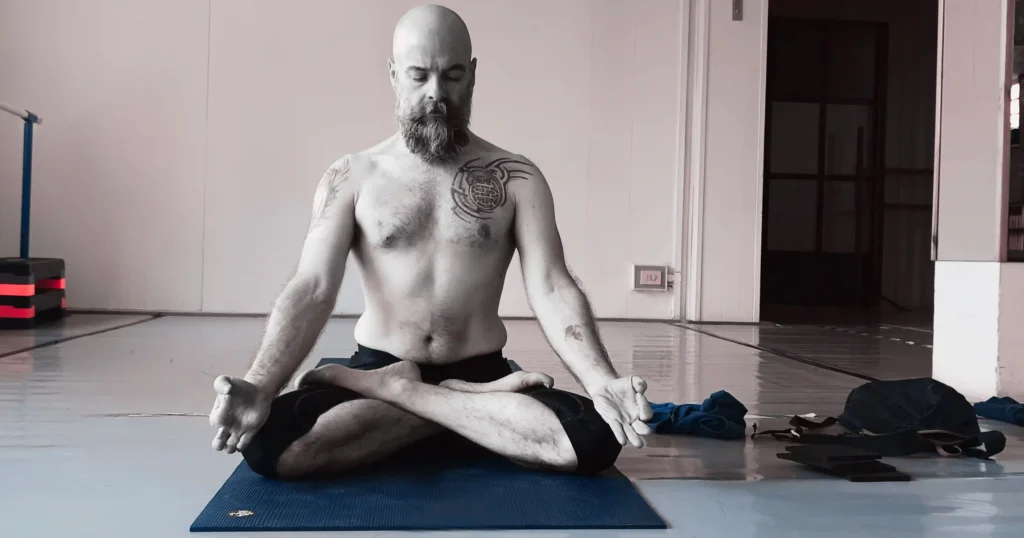
I practiced kung fu, tai chi chuan and chi kung for eight years — from there, attention to breath has always been present. Then more traditional Hatha Yoga, and finally Ashtanga. When I came to Ashtanga the breath was already the starting point on which to build everything else.
In my daily practice I know that sometimes the breath shifts: a slight retention during a jump through that passes through a handstand can help me stabilize, lengthening the exhale after inversions slows the heart rate. This is the natural expression of my practice — not forced or dogmatic, learned from teachers and study, refined by listening to myself on and off the mat.
The indications in this article are the compass. The path remains yours to walk.
Buona pratica
Om shanti
Pingback: The Seasons of Ashtanga: Bad Days, Regression, and Modifying the Practice - ashtangamarga.com